Ceramic coating vs paint protection film
Ceramic coating is a chemical layer that adds gloss, hydrophobicity and UV protection, while paint protection film (PPF) is a physical urethane skin that absorbs stone chips and self-heals swirl marks. In Adelaide, PPF wins on physical impact protection and ceramic coating wins on value, coverage and everyday gloss, which is why the strongest builds use PPF on the front and ceramic over the rest.
- PPF is the only option that physically stops stone chips, which matters on the South Eastern Freeway and Adelaide Hills gravel.
- Ceramic coating covers the whole car for the price of a partial PPF front, from $500 for a small car versus $1,200 for a front-end PPF kit.
- Ceramic does not stop rock chips and PPF does not deliver the same slick, self-cleaning surface, so they solve different problems.
- The premium Adelaide answer is PPF on high-impact panels plus ceramic everywhere, not one or the other.
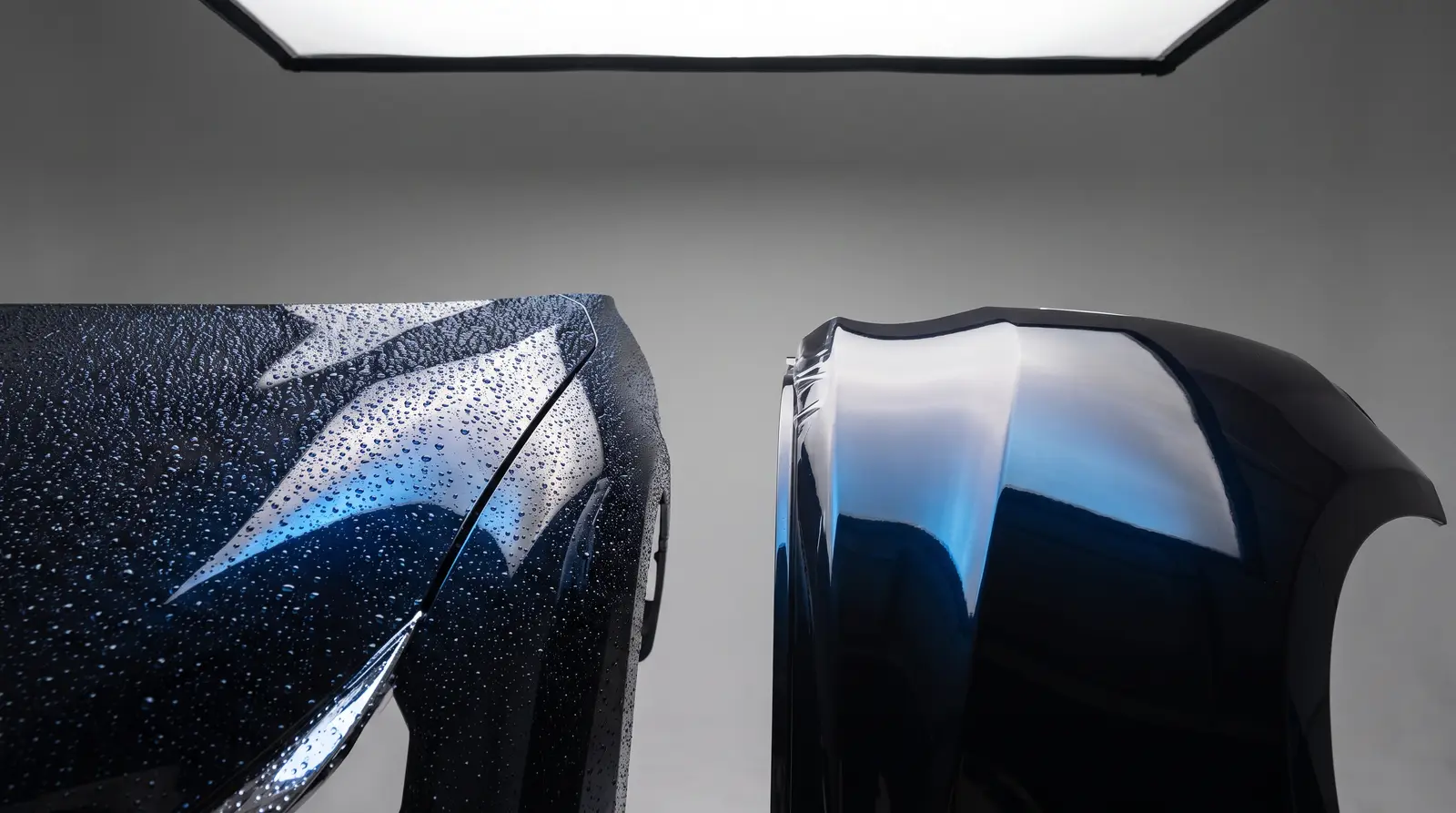
- Ceramic coating is chemical protection: gloss, UV defence and hydrophobicity across the whole car.
- PPF is physical protection: a thick urethane film that absorbs stone chips and self-heals light scratches.
- For Adelaide freeway and Hills driving, PPF on the front plus ceramic over the body is the definitive high-end setup.
Ceramic coating and paint protection film get lumped together as paint protection, but they defend against completely different threats. Ceramic coating is a liquid that cures into a hard, glass-like layer bonded to your clear coat. PPF is a self-healing urethane film laid over the paint like an invisible skin. In Adelaide, the choice comes down to what actually damages cars here: relentless UV, coastal salt, and the stone chips thrown up on the South Eastern Freeway and the unsealed roads through the Adelaide Hills.
What ceramic coating actually does
A ceramic coating is a SiO2 (silica) based liquid that chemically bonds to your paint and cures into a hard, sacrificial layer. It raises gloss, makes water bead and sheet off, blocks UV oxidation, and resists bird droppings, tree sap and hard water etching. What it does not do is stop a rock. A ceramic layer is measured in microns and offers no meaningful impact resistance. It protects the surface chemistry of your paint, not its structure.
In Adelaide terms, ceramic coating is the answer to our UV index (which hits extreme levels through summer), the hard water that spots panels after a hose-down, and the salt mist that drifts inland from Henley Beach, West Lakes and Semaphore. It keeps the car looking new and slashes wash time. It is not the answer to a truck flicking a stone into your bonnet on the freeway.
What PPF actually does
Paint protection film is a thick, clear thermoplastic urethane film, typically 150 to 200 microns, applied over the paint. Its job is physical: it absorbs the energy of stone chips, road debris and light scratches so the paint underneath survives. Quality PPF is self-healing, meaning fine swirl marks and scuffs disappear when the surface warms in the sun. Modern PPF also comes with a ceramic-infused top coat, so you get hydrophobic behaviour on top of the impact protection.
PPF is the only product that genuinely stops rock chips. If you commute up and down the freeway to the Hills, tow a caravan, or drive gravel roads around Stirling, Aldgate or Lobethal, the front of your car is being sandblasted daily. PPF is the fix.
Ceramic coating vs PPF: the head-to-head
| Factor | Ceramic coating | Paint protection film (PPF) |
|---|---|---|
| Protection type | Chemical: UV, oxidation, staining, gloss | Physical: stone chips, scratches, impact |
| Stops rock chips | No | Yes |
| Self-healing | No | Yes (warmth reactivates the film) |
| Lifespan | 2 to 7 years by tier | 7 to 10 years |
| Coverage for the money | Whole car | Usually front-end or partial |
| Adelaide entry cost | From $500 (small car) | From $1,200 (front-end, small car) |
| Best for | Gloss, easy washing, UV and salt | Freeway, Hills gravel, high-value paint |
| Main downside | No impact protection | Cost and visible edges if poorly installed |
Adelaide cost reality
This is where the decision usually gets made. A mid-tier ceramic coating covers the entire car and lasts around 4 years. A partial PPF front covers the bonnet, bumper, mirrors and a leading strip. Here is roughly what each costs in the 2026 Adelaide market.
| Car size | Full-car ceramic (mid) | Front-end PPF (partial) | Full-body PPF |
|---|---|---|---|
| Small / hatch | $900 to $1,200 | from $1,200 | from $4,500 |
| Sedan | $1,100 to $1,400 | from $1,500 | from $6,000 |
| SUV / 4WD | $1,400 to $1,800 | from $1,900 | from $7,500 |
The pattern is clear: ceramic coating protects the whole car for the price of a partial PPF front. Full-body PPF is the gold standard for physical protection, but at $4,500 and up it is a decision reserved for supercars, collectible paint and buyers who never want to see a chip.
The verdict: it is not either/or
For most Adelaide drivers, ceramic coating is the correct first move. It delivers the daily wins (gloss, easy washing, UV and salt defence) across the entire car at a sensible price. If your car is high value, or you spend real time on the freeway and Hills gravel, add PPF to the front and put ceramic over the top of everything. That combination is the definitive setup: the film takes the impacts, the coating handles the chemistry, and the whole car looks glass-slick.
Not sure whether your driving justifies PPF or whether ceramic alone is enough? We connect you with vetted Adelaide specialists who assess your car, your commute and your paint, then quote both options honestly. Get matched with a trusted local installer.
Get free quotes