What is ceramic coating and how does it work?
Ceramic coating is a liquid polymer, mostly silicon dioxide (SiO2), that chemically bonds to your car's clear coat and cures into a hard, transparent glass-like layer. It adds gloss, repels water and contaminants, and shields the paint from UV and chemical damage for years, not weeks.
- Ceramic coating is a semi-permanent SiO2 layer that bonds to the clear coat, unlike wax which sits on top and washes off.
- It protects against UV fade, bird droppings, tree sap, hard water spotting and light chemical etching, all constant threats in Adelaide.
- A quality coating lasts 2 to 7 years depending on grade, versus 6 to 12 weeks for wax.
- It makes the car easier to wash, not maintenance-free. Correct prep and curing decide the result far more than the bottle itself.
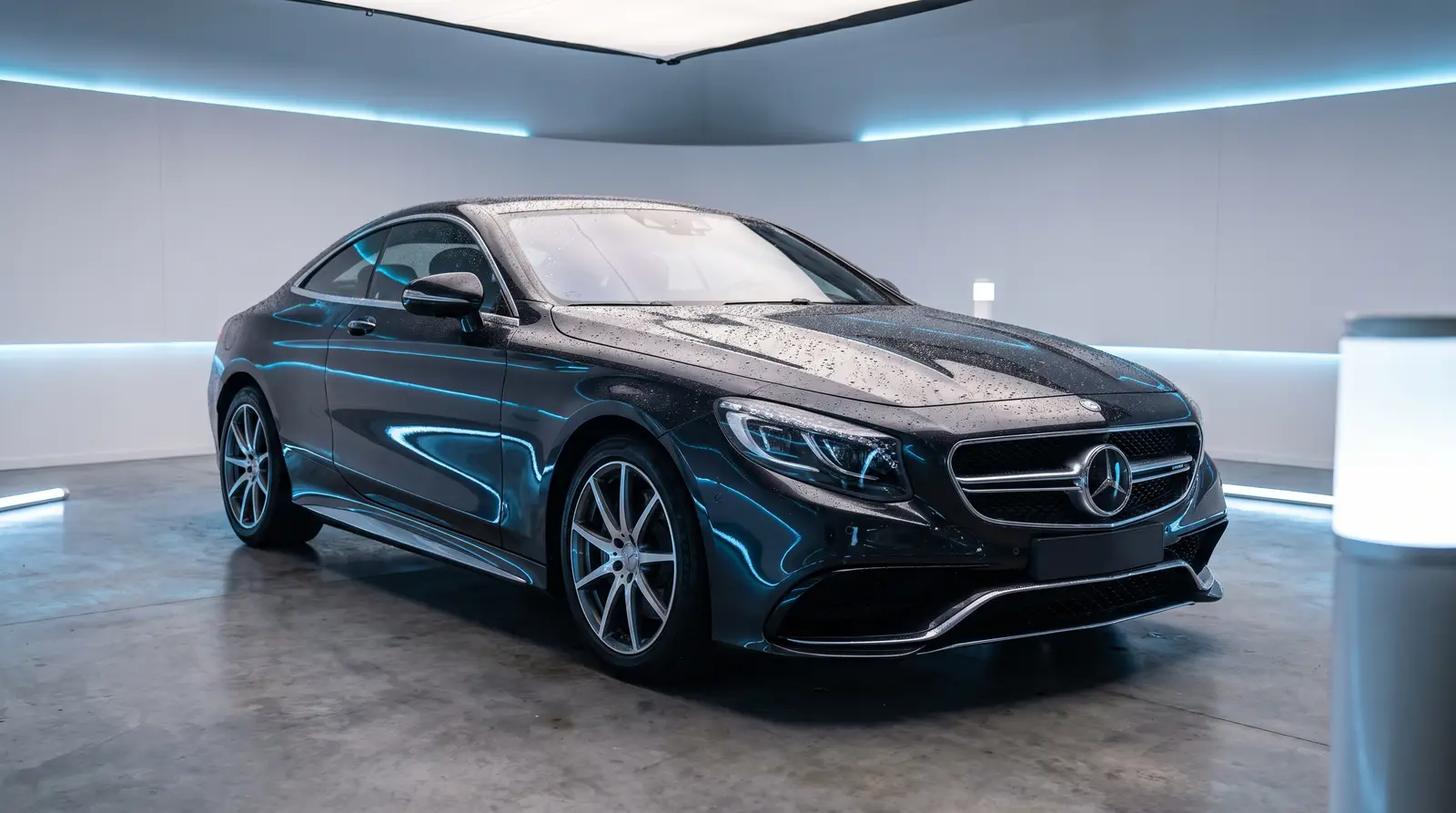
- Ceramic coating bonds chemically to the clear coat and cures into a hard glass-like layer.
- It is measured by SiO2 content and coating grade, and lasts years rather than weeks.
- The prep (decontamination and paint correction) matters more than the brand of coating.
Ceramic coating is a liquid polymer that hardens into a thin, transparent, glass-like shell over your car's factory clear coat. The active ingredient in most quality coatings is silicon dioxide (SiO2), the same compound found in quartz and glass. When applied to properly prepared paint, it forms a covalent bond with the clear coat and cures over 24 to 48 hours into a slick, hydrophobic surface that is measurably harder than the paint underneath.
That bond is the entire point. Wax and most sealants rest on top of the paint and lift off with UV, heat and detergent within weeks. A coating becomes part of the surface, which is why the honest way to describe it is semi-permanent: it does not wash off, and removing it takes machine polishing.
How ceramic coating actually works
The coating is applied by hand, one panel at a time, then levelled and buffed as it flashes. As it cures it cross-links into a dense matrix that fills the microscopic peaks and valleys of the clear coat. That does 3 things. It raises gloss by creating a flatter surface that reflects light more evenly. It repels water and oils because the cured film has a very low surface energy, so contaminants bead and roll instead of clinging. And it forms a sacrificial barrier that takes the hit from UV, acids and alkalis before they reach your paint.
Coatings are graded by SiO2 concentration and layer count. A single-layer consumer coating might sit around 70 to 80 percent SiO2. Professional-grade systems run higher concentrations, sometimes paired with additional top coats or a base layer, which is where the longer warranties come from. More SiO2 is not automatically better for every car, but it correlates with hardness, slickness and how long the beading holds up.
What ceramic coating protects against in Adelaide
Adelaide is a genuinely hard environment for paint, and that is what makes coating worth understanding here rather than as a generic upgrade. Our UV index sits at extreme for months, which oxidises and fades unprotected clear coat far faster than in cooler cities. Coating blocks a large share of that UV load and holds gloss for years.
- UV oxidation and fade, the number one killer of Adelaide paint given our long, high-UV summers.
- Bird droppings and tree sap, which are acidic and etch bare clear coat within hours in summer heat. On a coated car you have a real window to rinse them off.
- Hard water spotting from Adelaide's mineral-heavy mains supply, a constant issue for anyone who washes in the sun or lets sprinkler overspray dry on the panels.
- Coastal salt for cars kept around Henley Beach, West Lakes, Semaphore and Glenelg, where airborne salt accelerates corrosion and dulls finishes.
- Fine gravel dust and grime for anyone driving unsealed Adelaide Hills roads, which bonds less aggressively to a slick coated surface.
What ceramic coating does not do
This is where honest expectation-setting separates a good installer from a salesperson. Ceramic coating is not a force field. It does not stop stone chips, it does not prevent deep scratches from car park trolleys or careless washing, and it is not a substitute for paint protection film on high-impact areas like the bonnet and front bar. It also does not make a car self-cleaning. It makes washing faster and safer, and it dramatically slows chemical and UV damage, which is a different and very real benefit.
The coating is only ever as good as the paint it locks in. Coat swirled, contaminated paint and you have sealed the flaws in for years.
Why prep decides the result
Because a coating is transparent and permanent, it magnifies whatever is beneath it. That is why a proper job spends most of its hours before any coating is opened: a thorough wash, a chemical decontamination, a clay treatment to pull out embedded fallout, then paint correction to remove swirls and marring. Skip the correction and you lock existing scratches under glass. This is the single biggest reason two quotes for the same car can differ by hundreds of dollars, and why the cheapest quote is rarely the cheapest outcome.
A skilled Adelaide installer will inspect the paint under proper lighting, measure clear coat thickness before correcting, and tell you honestly whether your car needs single or multi-stage correction first. That conversation is the mark of a specialist worth booking.
Want a coating done right the first time? We connect you with vetted Adelaide ceramic coating specialists who correct the paint properly before they coat it. Tell us your car and suburb and we match you with trusted local installers for quotes.
Get free quotes