How to remove swirl marks from car paint
Swirl marks are removed permanently only by machine paint correction, which levels the fine scratches out of your clear coat. Consumer swirl-remover products and glazes temporarily fill or mask them, but the swirls reappear after a few washes because the scratches are still there.
- Swirl marks are real scratches in the clear coat, not a coating on top, so they must be levelled out.
- DIY swirl removers fill and hide swirls temporarily, they do not remove them.
- Machine correction is the only permanent fix, single stage clears most swirls on maintained paint.
- Prevent them coming back with proper wash technique plus a ceramic coating.
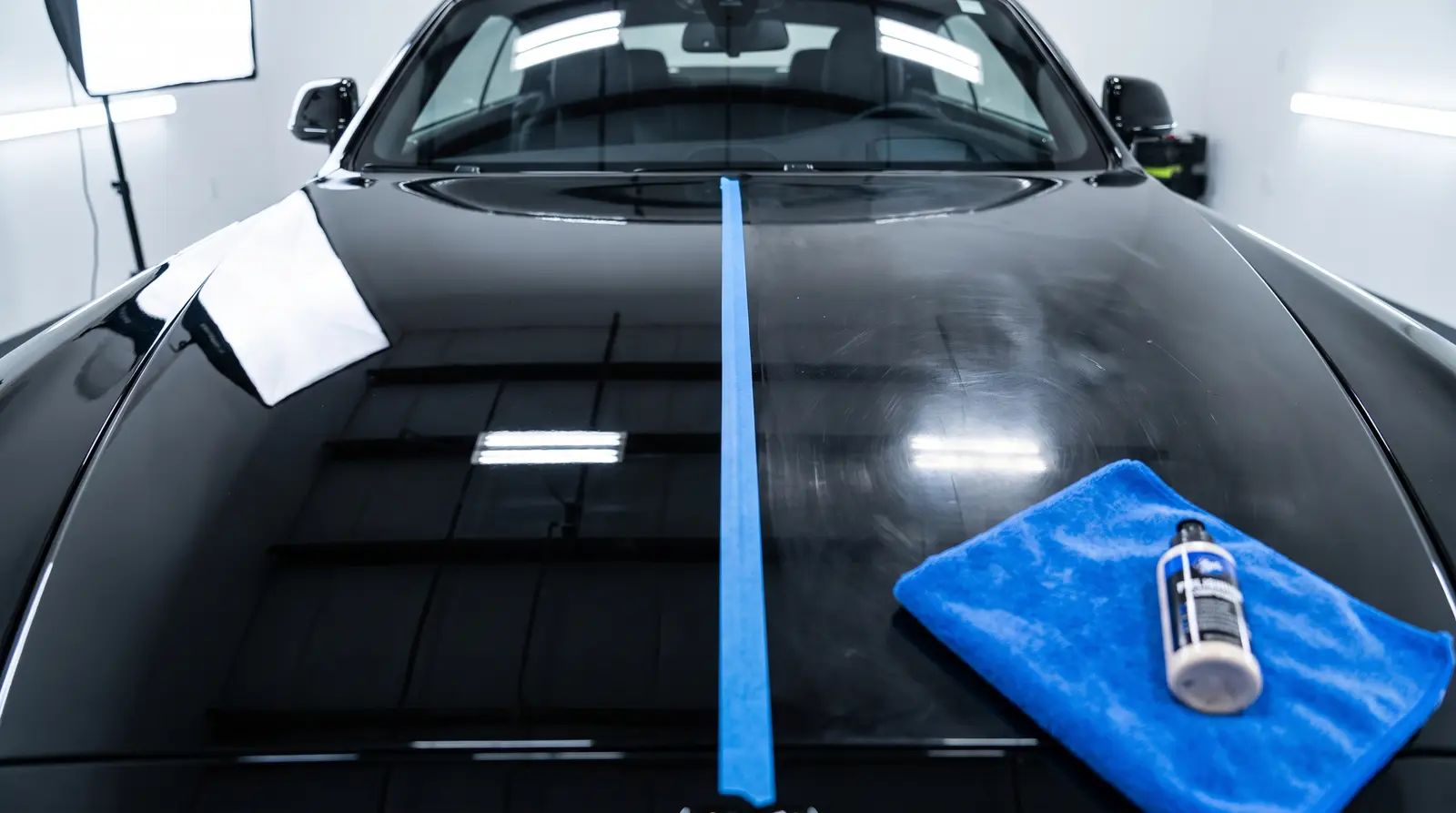
- Swirls are fine clear-coat scratches, mostly from wrong wash technique.
- Only abrasive machine polishing removes them for good, products just mask them.
- Correct, coat, then wash properly to keep them from returning.
Swirl marks are the fine, spider-web pattern of scratches you see on paint under direct sun or a bright LED, usually radiating out in circles. They are the single most common paint defect, and understanding what they are tells you exactly how to remove them. Each swirl is a genuine scratch in the clear coat, microscopically shallow but real. Because they are physical scratches, the only permanent fix is to remove a tiny amount of clear coat until the surface is level again. That is machine paint correction. Everything else on the shelf either fills the scratch temporarily or hides it with gloss, and it comes back.
Why DIY swirl removers do not work long term
Walk into any auto store and you will find swirl-remover creams, glazes and all-in-one products promising to erase swirls by hand. Here is the honest truth about what they do. Most contain fillers, oils or polymers that sit in the scratch and mask it, so the paint looks better for a wash or two. A few contain very mild abrasives, but applied by hand they lack the pad speed and pressure to actually level a swirl. Within 2 or 3 washes the fillers wash out and the swirls return, because the scratches were never removed.
If a product removed swirls by hand in one wipe, it would be abrasive enough to be dangerous to your clear coat. The physics does not allow a genuine permanent fix without controlled machine polishing.
How machine correction removes swirls for good
Machine correction is the real answer. A detailer uses a dual-action or rotary polisher with a foam or microfibre pad and an abrasive compound. The machine works the compound across the panel with controlled speed and pressure, removing a few microns of clear coat and levelling the surface so the swirls physically no longer exist. On a well-kept daily driver, a single-stage correction removes the vast majority of swirls. On dark or neglected paint, a multi-stage correction clears the last stubborn ones. Because the scratches are gone rather than filled, they do not return.
- Wash and decontaminate to remove bonded grime and iron particles.
- Clay or fine-abrasive decontamination to leave the surface glass-smooth.
- Test spot to confirm how the paint responds and how many stages are needed.
- Machine polishing with compound to level the swirls out of the clear coat.
- Refining pass to remove any haze the cutting step leaves behind.
- Protection: a ceramic coating or sealant to keep the corrected finish clean.
Why Adelaide cars swirl so easily
Swirl marks are overwhelmingly caused by wash technique, and Adelaide conditions make them worse. Washing in direct sun, which is hard to avoid here in summer, means water and product dry fast and grit is dragged across hot paint. Automatic car washes with stiff brushes are swirl factories. Using one bucket and a dirty sponge grinds road grit into the paint with every pass. And our fine, dry dust, especially off Hills gravel roads, settles on cars and turns any wipe into fine scratching. Dark cars show all of it most.
Keeping swirls from coming back
Correction removes existing swirls, but technique and protection stop new ones. The two-bucket method, one for wash solution and one to rinse your mitt, keeps grit off the paint. A quality wash mitt and a grit guard in the bucket help. Never use an automatic brush wash. And a ceramic coating is a genuine game-changer here: its slickness means grit slides off during washing instead of being dragged across the surface, dramatically reducing how easily new swirls form. Correct once, coat, wash properly, and you can go years swirl-free.
Swirl marks only disappear for good with proper machine correction. We connect you with vetted Adelaide correction specialists who remove swirls permanently and can coat the paint to keep them from returning. Get matched with a trusted local installer.
Get free quotes