What is paint correction and why does it matter?
Paint correction is the process of machine-polishing your clear coat to permanently remove swirl marks, light scratches, water spots and oxidation, restoring gloss and clarity to the paint itself. It is not a wax or a coating: it physically levels the damaged surface so light reflects cleanly again.
- Paint correction removes defects from the clear coat permanently, it does not hide them under a product.
- It is the prep step that makes a ceramic coating look flawless, because a coating locks in whatever is underneath.
- Adelaide UV, hard water and coastal salt create the exact defects correction fixes: oxidation, water spots and etching.
- Single-stage correction in Adelaide starts from $400, multi-stage from $800, depending on vehicle size and paint condition.
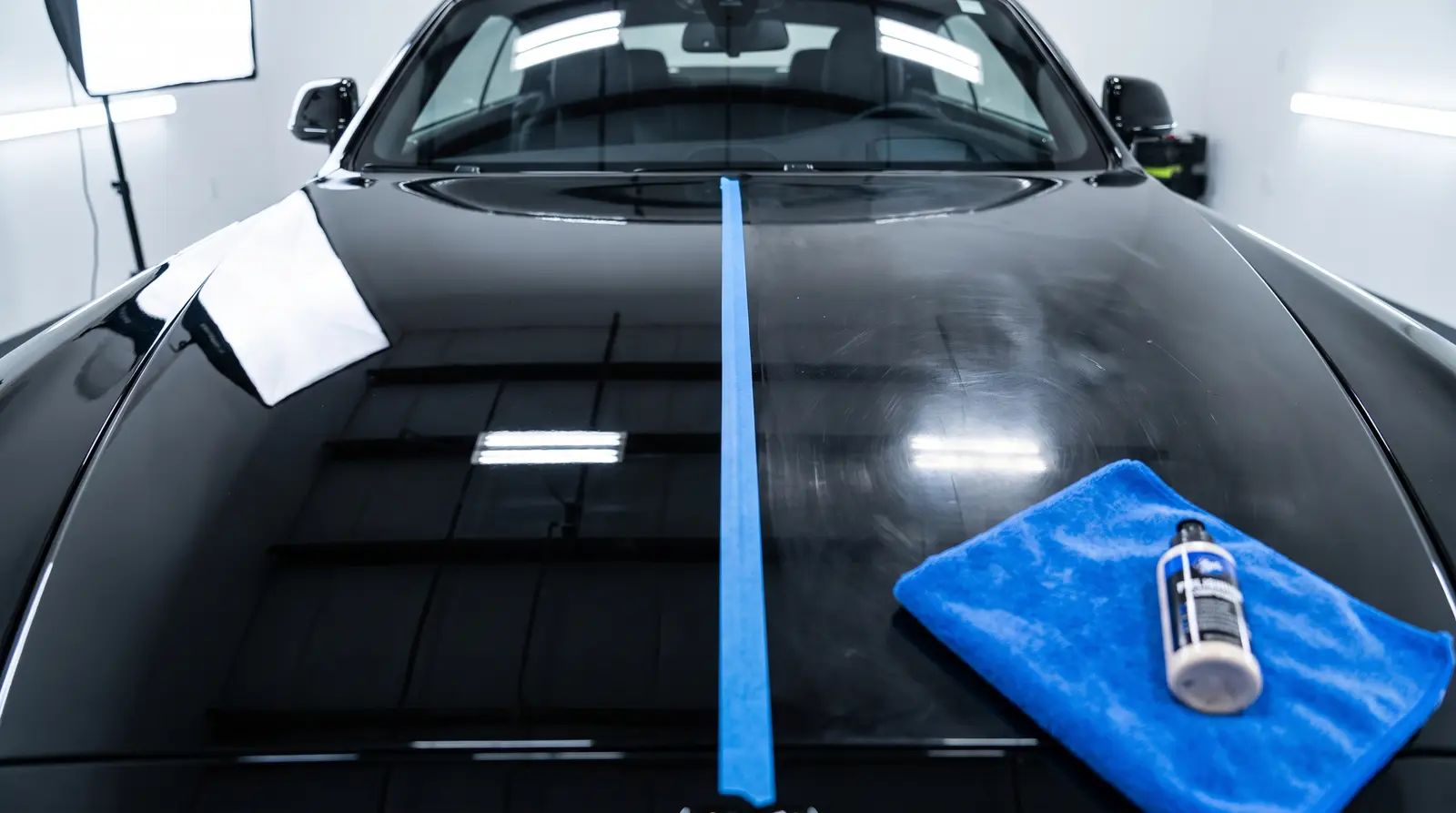
- Correction is abrasive machine polishing that removes a few microns of clear coat to level out scratches and swirls.
- A wax or coating applied over uncorrected paint traps every defect underneath the gloss.
- Correcting before you coat is the single biggest factor in how good the finished car looks.
Paint correction is the most misunderstood service in car detailing. Most people think it means making a dull car shiny, and it does, but the mechanism matters. Your factory paint has a clear coat sitting over the colour layer. Over years of washing, sun and road grime, that clear coat picks up thousands of fine scratches called swirl marks, plus water spots, bird-dropping etching and oxidation. Those defects scatter light instead of reflecting it, which is what makes paint look tired, hazy or holographic under the sun. Correction uses a rotary or dual-action machine polisher with an abrasive compound to remove a controlled, tiny amount of clear coat, levelling the surface so light reflects cleanly again.
What paint correction actually removes
The confusion comes from marketing that lumps polishing, glazing and coating together. True correction is defined by what it permanently removes from the clear coat itself, not what it lays on top. A skilled Adelaide detailer measures your clear coat with a paint depth gauge before touching it, because there is a finite amount to work with and each correction pass removes some.
- Swirl marks: the cobweb pattern you see under direct sun or LED light, caused mostly by poor washing technique.
- Light and medium scratches: anything that does not catch your fingernail can usually be levelled out.
- Water spot etching: mineral rings burned into the clear coat by Adelaide hard water drying on hot panels.
- Oxidation: the chalky, faded top layer that UV creates on older or neglected single-stage paint.
- Bird-dropping and bug etching: acidic marks that eat into the clear coat if left in the sun.
- Buffer trails and holograms: haze left by a previous poor-quality machine polish.
What correction does not remove is anything that has gone through the clear coat into the colour layer. Deep scratches you can feel with a fingernail, stone chips down to primer, and cracked or peeling clear coat are past the point of polishing. Those need touch-up or respray, which is a different trade entirely.
Why Adelaide paint needs it more than most
Adelaide is a genuinely harsh environment for automotive paint, and the defects correction fixes are exactly the ones our climate produces. The UV index runs to 12 or higher through summer, and sustained ultraviolet is what oxidises clear coat and fades colour. Our water is hard, so a car washed at home and left to air-dry in the sun collects mineral water spots that etch within a single hot afternoon. Cars parked near the coast at Henley Beach, West Lakes, Semaphore or Grange carry a constant film of salt that accelerates surface breakdown. Even the daily commute contributes: brake dust, tree sap from the plane trees along the eastern suburbs, and gravel dust off Adelaide Hills roads all abrade paint over time.
A black car that lives outdoors in Adelaide will show visible swirl marks within 18 months of ordinary home washing. That is not a defect in the paint, it is the environment plus wash technique doing exactly what physics predicts.
How correction connects to ceramic coating
This is the part that saves people money, so read it twice. A ceramic coating is a clear, hard, semi-permanent layer that bonds to your clear coat and lasts 2 to 7 years depending on grade. It is transparent, which means it locks in whatever the paint looks like the day it goes on. If you coat a swirled, water-spotted car, you have just sealed those defects under a layer that lasts years. The gloss a coating adds cannot hide them. That is why every reputable Adelaide installer corrects the paint first, then coats. The coating is the protection, the correction is the beauty.
It also works the other way. Once corrected paint is coated, it is far easier to keep clean. The coating's slickness means grit slides off during washing instead of being dragged across the surface, which is what caused the swirls in the first place. Correct once, coat, and maintain properly, and you can go years without needing to correct again.
Single stage versus multi stage in brief
Correction is sold in stages. A single-stage correction is one combined compounding-and-polishing step that removes roughly 60 to 80 percent of visible defects, which is plenty for a well-kept daily driver. Multi-stage correction uses a heavier cutting compound first, then one or two refining polishes, targeting 85 to 95 percent defect removal for neglected, heavily swirled or dark-coloured cars where every flaw shows. More stages means more labour hours, which is the main cost driver.
| Approach | Defects removed | Best for | Adelaide price from |
|---|---|---|---|
| Single stage | 60 to 80 percent | Well-kept daily drivers | $400 to $850 |
| Multi stage | 85 to 95 percent | Dark, neglected or show cars | $800 to $1,800 |
Prices scale with vehicle size and paint condition. A small hatch single-stage correction starts from $400, a large SUV or ute multi-stage from $1,800. The honest answer to what yours costs comes from an inspection, because paint condition is impossible to price by phone.
Not sure whether your paint needs a single or multi-stage correction? We connect you with vetted Adelaide paint correction specialists who inspect your clear coat and quote honestly, with no pressure to over-service. Get matched with a trusted local installer today.
Get free quotes