Do you need paint correction before ceramic coating?
Yes, in almost every case you need at least some paint correction before a ceramic coating, because the coating is transparent and bonds permanently to your clear coat, locking in whatever defects are present. On genuinely flawless new paint a single-stage or light polish is enough, but coating over swirls and water spots seals them under a layer that lasts years.
- A coating is clear and permanent, so it preserves every defect underneath it for the coating's full life.
- Almost every car needs at least a single-stage correction before coating, even new ones.
- Skipping correction to save money seals in swirls for 2 to 7 years and wastes the coating.
- Match correction depth to coating tier: heavier correction for longer-life flagship coatings.
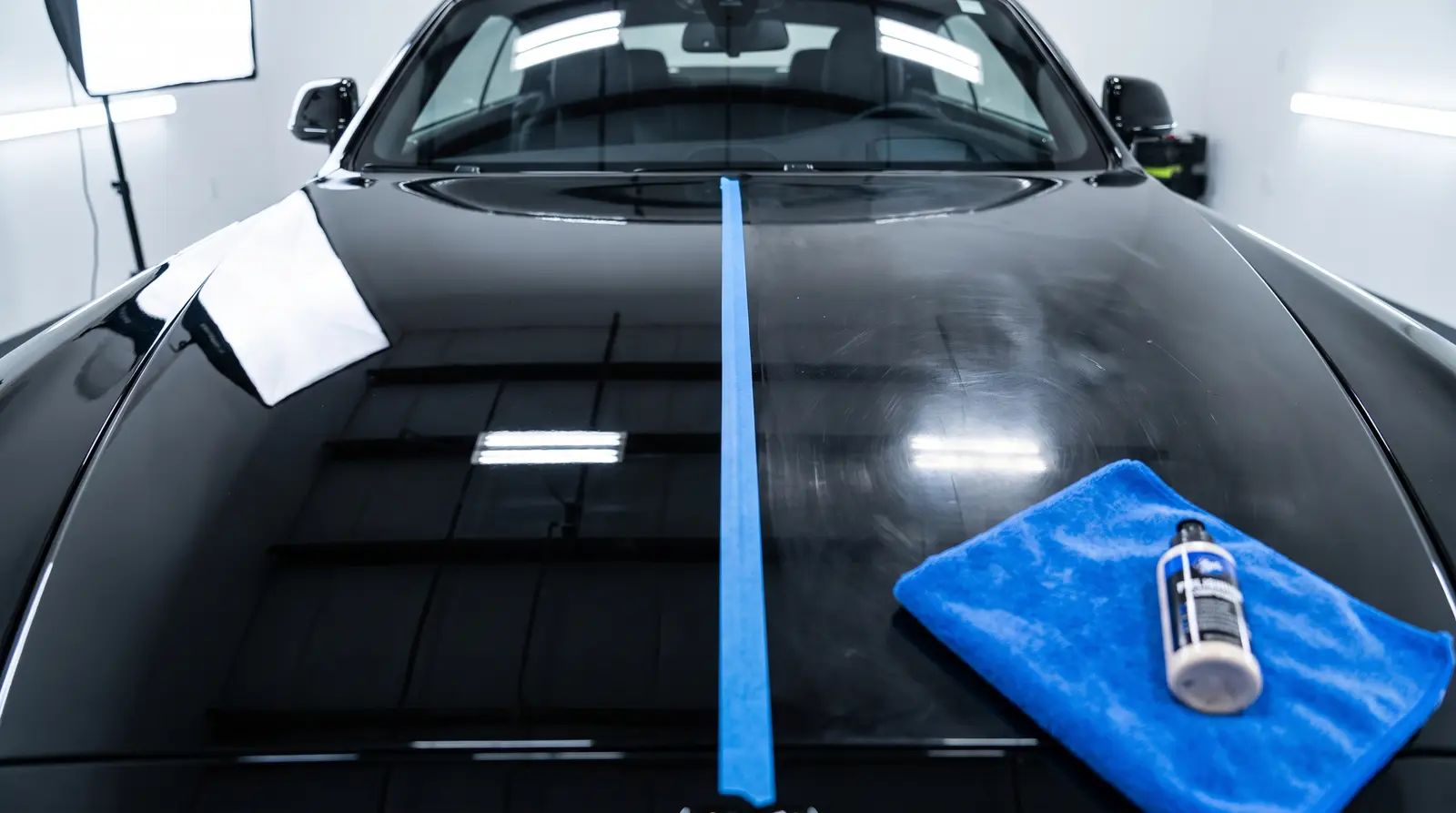
- Ceramic coating is transparent, so it cannot hide defects, it locks them in.
- Correction is the prep that makes the coating look flawless, not optional polish.
- The longer the coating lasts, the more the correction underneath matters.
This is the question that decides whether a ceramic coating is money well spent or money wasted. The short answer is yes, you need correction before coating, and here is the physics behind it. A ceramic coating is a clear, glass-hard layer that chemically bonds to your clear coat and stays there for 2 to 7 years depending on grade. Because it is transparent, it adds gloss but changes nothing about the defects underneath. If your paint has swirl marks and water spots the day it is coated, those defects are now sealed under a layer engineered specifically to be permanent and hard to remove. You cannot polish them out later without stripping the coating first.
Why a coating cannot fix what correction fixes
People assume the gloss of a fresh coating hides minor flaws. It does the opposite. A coating's high-gloss finish reflects light more sharply, which makes underlying swirls and haze more visible in sunlight, not less. Detailers see this constantly: a car coated without correction looks great in the shade and shows every swirl the moment it hits Adelaide sun. The coating did its job, the paint just was not corrected first.
Coating uncorrected paint is like framing a scratched photo behind museum glass. The glass makes it shinier and protects it, but you have permanently preserved the scratches you should have removed first.
How much correction different cars need
The right amount of correction depends on your paint's starting condition, not a fixed rule. Here is how it breaks down in practice.
| Paint condition | Correction needed | Why |
|---|---|---|
| Genuinely flawless new car | Light polish or single stage | Removes dealer wash marks and transport film |
| Well-kept daily driver | Single stage | Clears light swirls and minor spotting |
| Neglected or dark paint | Multi stage | Heavy defects must be removed before locking in |
| Show or resale car | Multi stage | Flawless base for a premium coated finish |
Even a brand-new car usually needs a single-stage correction. New paint arrives with dealer wash swirls, transport protective-film residue and handling marks. Coating a new car without that light correction seals in imperfections you paid a premium not to have.
Matching correction to coating life
The longer your coating lasts, the more the correction underneath matters, because you live with the result longer. Pairing a heavy multi-stage correction with a 2-year entry coating is overspending on prep for a short protection window. Pairing a flagship 7-year coating with no correction is the opposite mistake: a flawless-capable coating locking in a flawed base for the better part of a decade. The sensible pairings are straightforward.
- Entry coating (2 yr): single-stage correction is proportionate.
- Mid coating (4 yr): single-stage correction for a well-kept car, multi if dark or neglected.
- Flagship coating (7 yr): multi-stage correction so the finish is worth locking in for 7 years.
The Adelaide-specific reason not to skip it
Adelaide's climate makes skipping correction a worse bet than in milder cities. Our UV and hard water mean uncorrected paint typically carries water spots and early oxidation. Seal those under a coating and they are locked in through years of the exact conditions, coastal salt at Henley and Semaphore, gravel dust in the Hills, that would otherwise keep degrading the surface. Correct first and the coating protects genuinely clean paint, which is the whole point of the investment.
When can you skip correction?
There is one honest exception. If the paint is genuinely, verifiably flawless, a delivery-mileage car inspected under proper lighting with no marring, a light polish to remove any wash film is enough and a full correction is unnecessary. That is rare. A reputable Adelaide installer inspects the paint and tells you the truth: if it needs nothing, they will say so rather than sell you correction you do not need.
The right amount of correction before coating depends entirely on your paint's condition. We connect you with vetted Adelaide specialists who inspect first and recommend only the correction your car genuinely needs before coating. Get matched with a trusted local installer for an honest assessment.
Get free quotes